Ecommerce SEO Services: Proven Strategies to Increase Online Store Sales
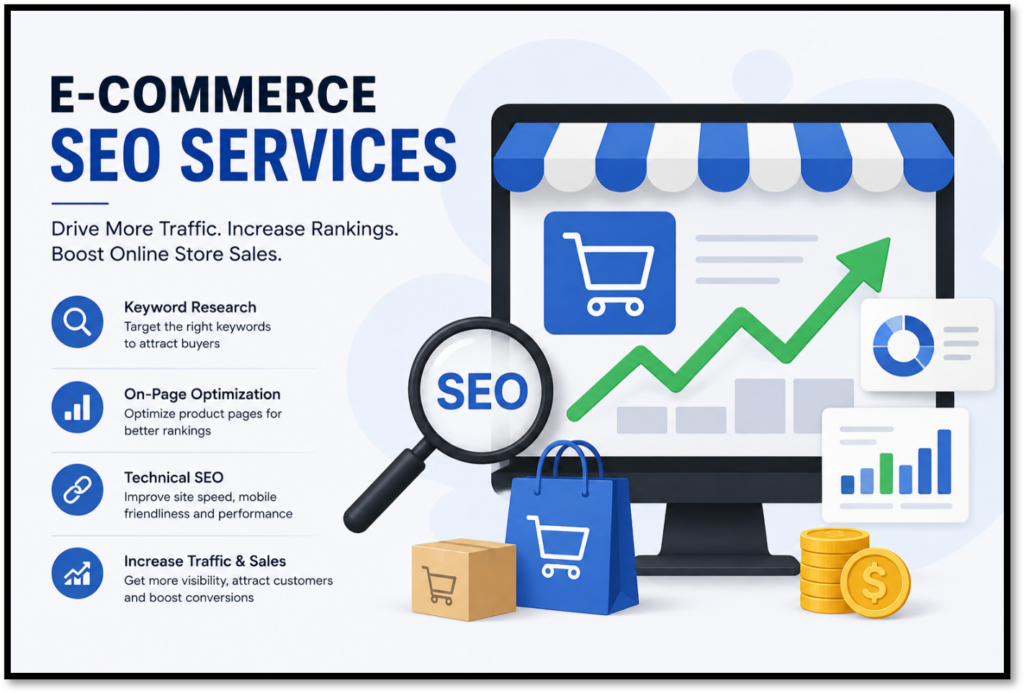
Each day, thousands of shoppers are looking for products just like those in your store. The only issue is whether they will find your listings or someone else’s. It doesn’t matter how beautiful the pages are that you offer or whether you have the quickest process to purchase or the lowest prices, because no one will know about your store through Google.
This is precisely why e-commerce SEO services have become the key to sustainable online success, and why savvy marketers are changing the way they allocate funds from temporary advertising to sustained search presence.
Why E-Commerce SEO Services Matter More Than Ever
While paid advertising delivers traffic fast, once you cut the budget, the traffic goes with it. SEO is quite different from that. It lays down a groundwork that continues attracting consumers even after the hard work is done, months on end, without breaking into your ad budget. A successfully conducted e-commerce SEO optimization ensures that your product pages get exposed to potential customers who have the intention of buying.
These popular stores did not become so through happenstance alone; rather, they worked hard on making technical adjustments and changes to content and user experience in ways that search engines like. So let us see exactly how they got there.
Proven Strategies That Drive Real Results
1. Fix Your Technical Foundation First
Before trying to rank, your website must be crawlable and quick. Broken links, duplicated product pages, load speed issues, and bad mobile usability silently sabotage your rankings. An audit is something that any store trying to grow should start with.
2. Optimise Product and Category Pages
This is not the case with generic descriptions taken directly from manufacturers. There should be unique content on all pages of the product line, including titles, description texts, and structured data, to make sure that search engines will show rich snippets.
3. Build a Smart Internal Linking Structure
All the categories, collections, and even blog posts must be linked seamlessly. This will help search engines comprehend your website structure and allow consumers to find more products, thereby boosting the average order value.
4. Create Content That Answers Buyer Questions
Buyer’s guides, comparisons, and how-to pieces attract consumers at an early stage. This content creates trust and channels traffic automatically to the product page.
5. Earn Quality Backlinks
Backlinks from credible and relevant sites will continue to be an effective ranking signal. Content marketing and press releases can aid in building authority in your niche.
6. Prioritise Page Speed and Mobile Experience
More than half of all online shopping is conducted using mobile phones. A slow or unappealing website on a mobile will cost you sales before the customer even notices your products.
7. Optimise for Local and Voice Search
If you own physical stores or deliver products to particular regions, local SEO strategies such as optimizing Google Business Profile may bring in nearby consumers searching for “near me.”
How to Track and Measure Your SEO Success
Investing in e-commerce SEO services without monitoring the results is similar to driving blindfolded. Data will give you feedback about your successes, failures, and where to move next. Below are the numbers that really matter for e-commerce.
1. Organic Traffic
Be vigilant about monitoring the traffic from searches that you receive every month, particularly focusing on which of your product categories receive the most traffic.
2. Keyword Rankings
Monitor the ranking not only for the main keyword but also for all keywords associated with your products. Moving from page three to page one means money in the bank, and weekly tracking is advised.
3. Conversion Rate
Ranking high is meaningless if your visitors leave your website without making a purchase. Combining traffic statistics with data from the checkout process can help you differentiate real SEO success from vanity metrics.
4. Bounce Rate and Time on Page
How useful was the information provided? These statistics will tell you if your website content fulfills the searchers’ expectations. The high bounce rate for a product page may indicate either slow loading time or a poorly written product description.
5. Backlink Growth and Domain Authority
Good backlinks have a cumulative effect. Monitoring newly acquired referring domains will enable you to be sure that your efforts bear fruit.
With such tools as Google Search Console, Google Analytics, and SEO tools, this task becomes easy. Regular analysis of such metrics once per month will ensure your tactics stay fresh and all your efforts at e-commerce SEO optimization prove effective.
Why the Results Compound Over Time
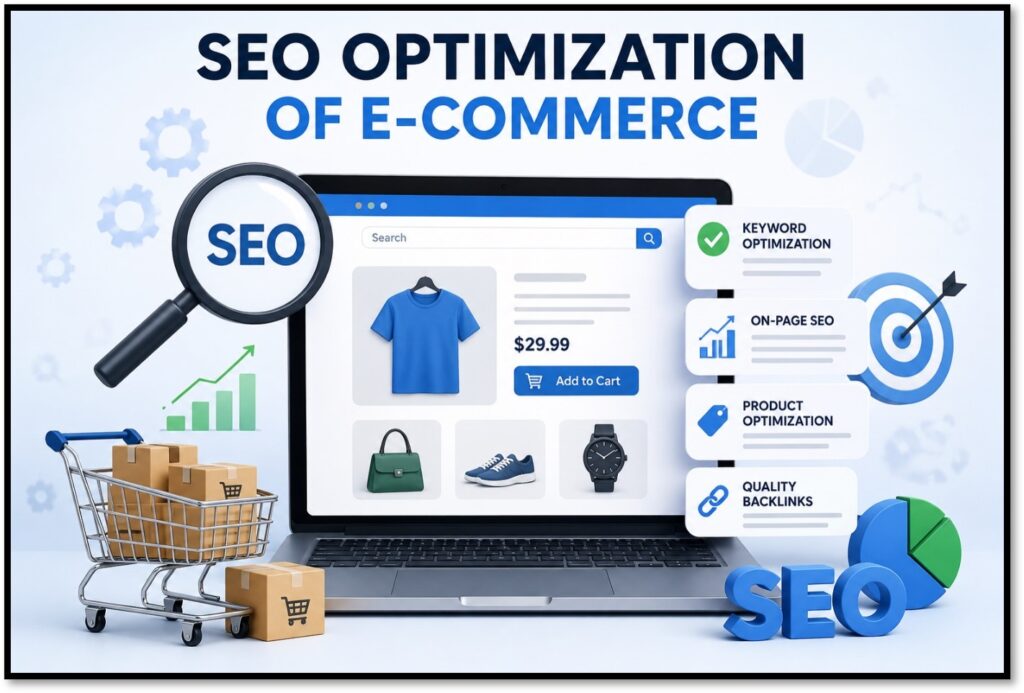
In contrast to paid advertising, SEO builds upon itself. The work done by optimizing an article or product page will pay off in organic traffic for years to come. When you combine a solid technical foundation, great content, and links, your e-commerce store starts moving up.
It won’t happen overnight, but what is important is that it really works. Businesses that pursue structured SEO optimization of e-commerce sites always outdo their competition using only paid traffic sources.
Conclusion
Building up a website isn’t all about having one viral marketing campaign. It’s about consistent visibility that makes sure people keep discovering your brand on a daily basis. By hiring a professional SEO company to work on your online business, you will be able to build up a solid technical base and establish authority over your competitors.
At Ranktubosys, this is the exact results-oriented approach that can help online stores stop looking for traffic and take control of their search ranking positions.
Frequently Asked Questions
1. How long does e-commerce SEO take to show results?
It takes about 3-6 months for the process to show significant progress, based on competition level, age of the website, and consistency of strategy implementation.
2. Is SEO better than paid ads for online stores?
SEO creates sustainable organic traffic without costing anything, whereas ads provide quick but temporary results. The most successful sites employ both methods.
3. What’s the biggest SEO mistake e-commerce stores make?
Using duplicate or manufacturer’s product descriptions. Unique and well-optimized content is crucial for good SEO ranking and competitive advantage.
4. Do product reviews affect SEO rankings?
It helps to improve trust factors and increase click-through rate, and it often allows the use of rich snippets.
5. How many keywords should one product page target?
Target one main keyword and two to three supporting secondary keywords per page to keep it relevant, but avoid keyword stuffing.